
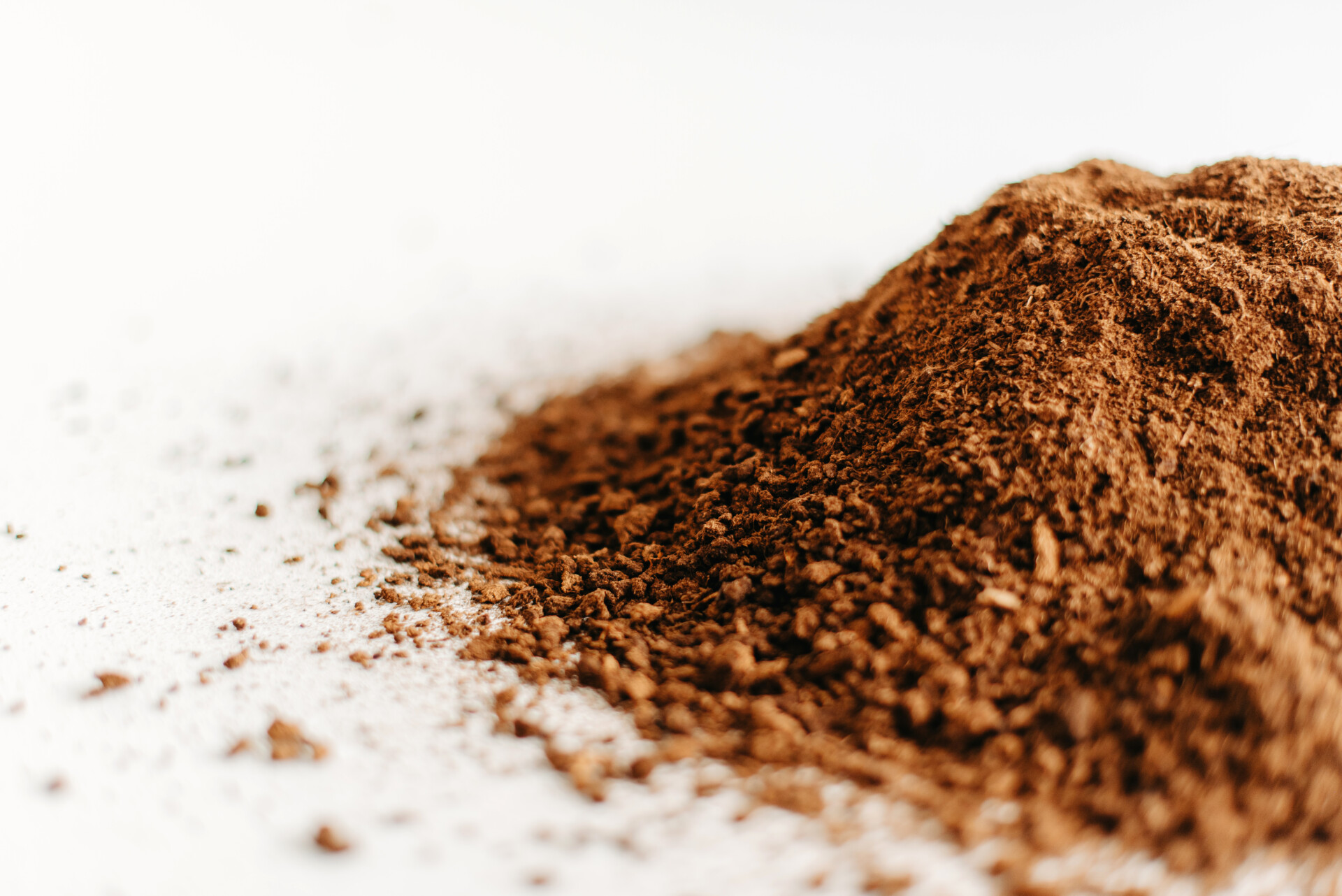
Two bags can both be labelled “peat moss” and still behave very differently in a growing system. One drains freely and stays light for months. The other holds too much water, compacts and pushes pH where your crop does not want it. For a grower or substrate producer, that difference shows up as uneven germination, root problems and inconsistent batches.
Sphagnum peat moss is the material most professional growing media are built on. This guide explains what makes it different from other peat, how its pH works, where it performs best and what to check before you place an order. If you already know what you need, you can go straight to our organic peat moss range.
What Makes Peat Moss “Sphagnum” Peat?
Sphagnum peat moss is the partly decomposed remains of sphagnum mosses that accumulated over thousands of years in raised bogs. These bogs are fed mainly by rainwater, not by mineral-rich groundwater. As a result, the peat is low in nutrients, acidic and highly fibrous.
It is often confused with two other materials:
- Living or dried sphagnum moss – long, whole moss strands harvested from the bog surface. It is used for orchids, hanging baskets and floristry, not as a bulk growing medium.
- Sedge or reed peat (low bog peat) – formed from sedges, reeds and other plants in groundwater-fed fens. It is darker, more decomposed, denser and less acidic.
Within sphagnum peat, the key variable is the degree of decomposition. Peat professionals usually describe it on the von Post scale, a 1–10 rating where H1 is undecomposed and H10 is fully humified. Lightly decomposed white peat (top bog layers) has open, fibrous structure and high air capacity. More decomposed brown and black peat from deeper layers holds more water but has less air space. Our article on peat moss decomposition levels covers this in more detail.
Sphagnum Peat Moss pH and Why It Matters
Natural, unlimed white sphagnum peat is strongly acidic. Our white peat moss typically has a natural pH of 3.5–4.5. Most vegetables, ornamentals and propagation crops grow best at around pH 5.5–6.5, so peat for these uses is usually limed.
Liming means adding ground limestone or dolomite to raise pH to a target value. It is done during production, so the buyer receives a ready, stable product. This gives you two basic options:
- Unlimed (natural pH) peat – for acid-loving crops such as blueberries, cranberries, rhododendrons and azaleas, or for substrate producers who prefer to adjust pH in their own recipes.
- Limed (pH-adjusted) peat – for seedlings, potting and general horticulture, where the grower wants a medium that is ready to plant.
Keep in mind that pH in the container will continue to move over time. Irrigation water alkalinity and fertiliser type both have an effect. Peat sets the starting point, so regular pH testing remains good practice.
Main Uses of Sphagnum Peat Moss
Sphagnum peat moss is valued for one combination of properties: high water-holding capacity together with good air space, low nutrient content and a structure that resists collapse. That is why it suits several professional applications.
Seed Starting and Propagation
Fine fractions such as 0–5 mm or 0–10 mm give even contact with small seeds and plugs. Low natural nutrient levels let the grower control feeding precisely in the early stages, when young roots are most sensitive.
Potting and Container Growing
Medium and coarse fractions (for example 0–20 mm or 10–30 mm) keep air in the root zone over longer crop cycles. This matters for container plants, shrubs and trees that stay in the same pot for months.
Acid-Loving Crops
Blueberry and other acidophile growers use unlimed or lightly limed sphagnum peat to keep root-zone pH low. See our peat moss for blueberries and acidic plants for suitable products.
Soil Improvement
Mixed into sandy or heavy soils, sphagnum peat improves water retention and structure. For field use, it should be worked into the root zone rather than left as a thin top layer, which dries out and repels water.
Raw Material for Substrate Production
For substrate factories, sphagnum peat is the base material. Batch-to-batch consistency in fraction, moisture and pH is often more important than any single specification.
What Does “Organic Sphagnum Peat Moss” Mean?
“Organic” is used in two different ways, and buyers should know which one a supplier means.
In everyday language, all sphagnum peat is organic because it is formed from plant material. This is different from a certified organic input. If you produce under an organic certification, check two things with your certifier:
- Whether peat is an approved input for your scheme and crop type.
- Whether any additives – lime, fertiliser, wetting agent – are also permitted.
In the United States, many growers check input listings from the Organic Materials Review Institute (OMRI). Other markets have their own rules. Unfertilised, natural peat with no additives is usually the simplest starting point, but approval always depends on your scheme.
Is Sphagnum Peat Moss Harvested Responsibly?
Peatlands store large amounts of carbon, and peat extraction is a valid environmental concern. Peat forms slowly, so extraction must be planned and limited.
At ETEPEK, we work with planned extraction sites, keep untouched buffer zones around sensitive areas and rehabilitate bogs after harvesting. Rehabilitation includes managing water levels and reintroducing native plants so sphagnum moss can grow again. We also develop alternative materials, including coir, wood fibre and composted bark, to reduce peat use where they perform well. You can read more on our sustainability page.
How to Choose the Right Sphagnum Peat Moss for Your Operation
The right product depends on your crop, your growing system and how you plan to use the peat.
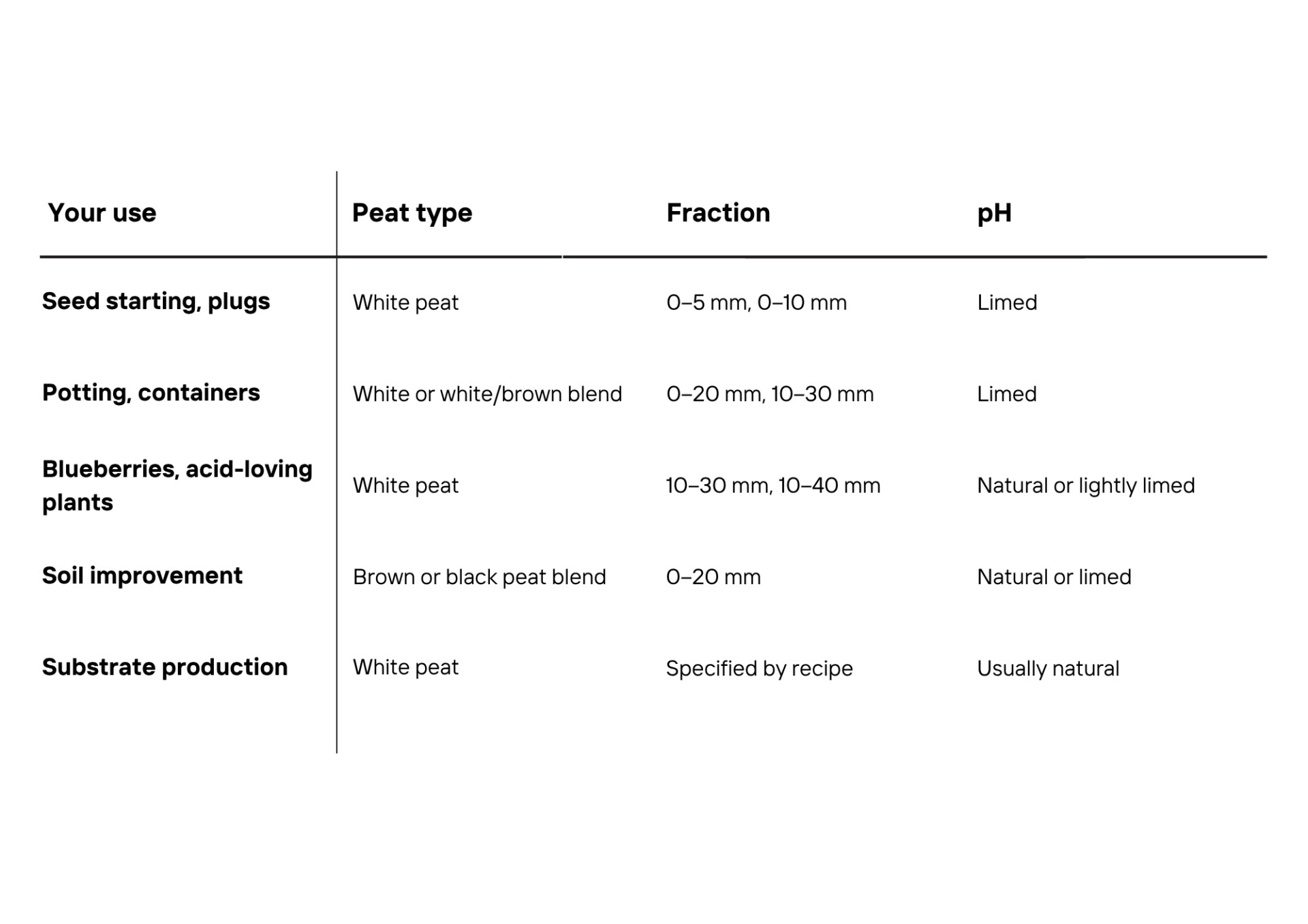
Before ordering, also confirm the moisture content, packaging volume (compressed or loose) and the documents your import market requires, such as a phytosanitary certificate. If no standard product fits your needs, a custom peat moss blend can combine the right fraction, pH level, fertiliser and wetting agent in one product.
Key Takeaways
- Sphagnum peat moss comes from raised bogs. It is acidic, low in nutrients and fibrous, unlike living sphagnum moss or sedge peat.
- Natural white sphagnum peat has a pH of around 3.5–4.5. Choose limed peat for most crops and unlimed peat for acid-loving plants.
- Fraction decides how the peat behaves: fine for propagation, coarse for long crop cycles and better air space.
- “Organic” on a label does not mean certified. Check inputs and additives with your certifier.
- Ask for consistent fraction, pH and moisture across batches. Consistency matters as much as specification.
Looking for a reliable supply of sphagnum peat moss for your growing media or distribution business? Explore our organic peat moss products or request a quote with your crop, fraction and pH requirements.
You might also like
Mould in Peat Moss – Why It Forms and Should You Be Concerned?
Mould in peat moss is a natural result of microbial activity and humidity. Learn why it happens, if it's harmful, and how to prevent it.
Read the article
Peat vs Compost vs Coconut Fiber: Which Soil Improver Is Best?
Peat, compost, or coconut fiber? Compare soil improvers to find out which option suits your plants and growing goals best.
Read the article
Choosing the Best Drainage Pots for Healthy Plants
Choosing the right pot with proper drainage can prevent root rot and promote vibrant plant growth. Here's how to do it right.
Read the article